When you click on links to various merchants on this site and make a purchase, this can result in this site earning a commission. Affiliate programs and affiliations include, but are not limited to, the eBay Partner Network.
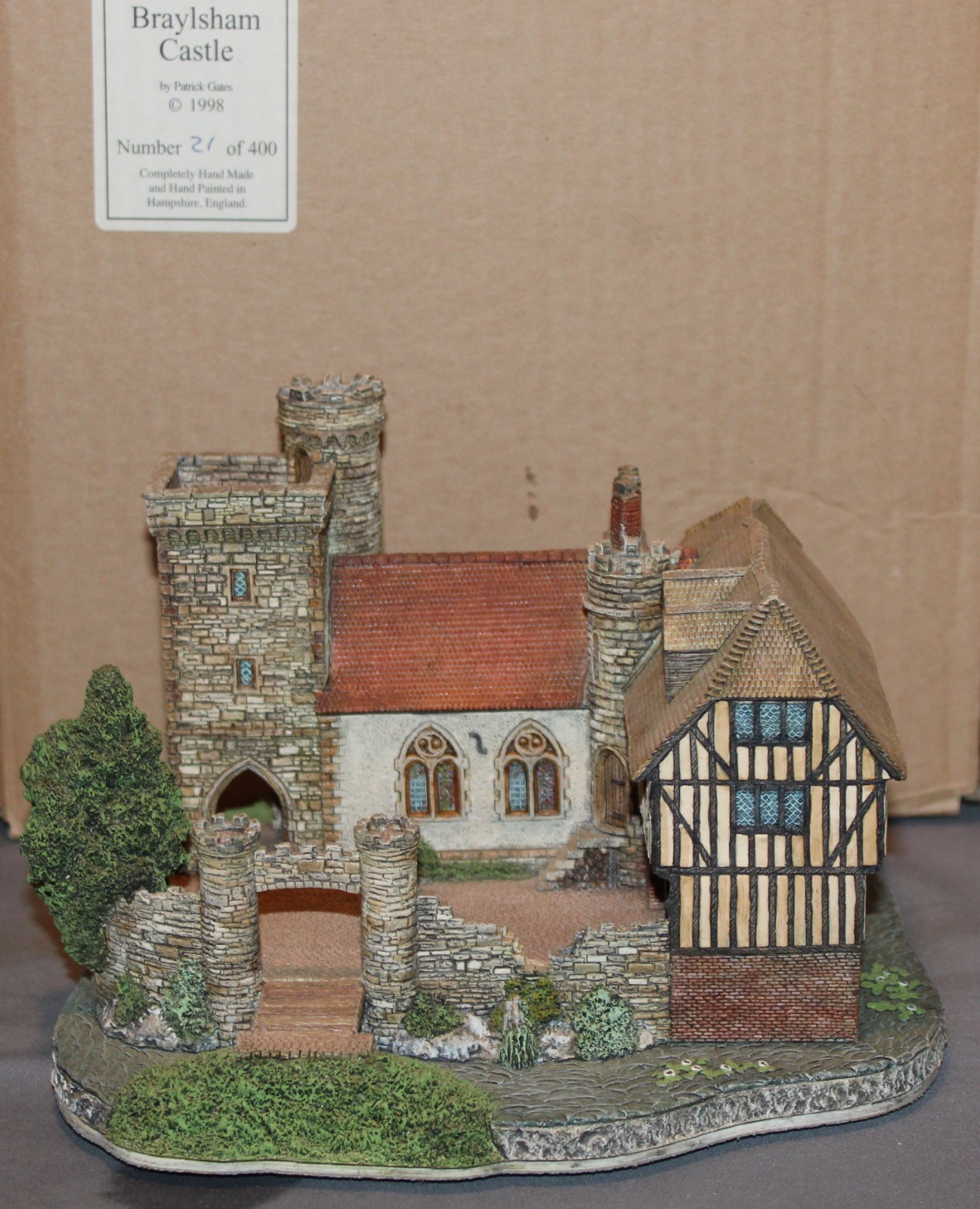
Hereis the JP Editions #21 of Braylsham Castle.
Thismodel was produced in 1995 in the standard 400 edition size. It wasthe final standard edition of 400 that JP Editions produced. Significantly less than the scheduled 400 were actually cast andpainted.
Seeexpanded description below.
Asseen in photos, original external labeled box is included. Box mayshow some storage wear.
NoCOA is available for this model.
Approximatedimensions are 8.0” x 8.0” x 5.5”
Thislisting does not qualify for combined shipping.
Collectorscan take advantage of reduced shipping cost for this model.
Previouslydisplayed. No damages, fixes or repairs. Almost Mint.
Aswith all previously displayed JP Editions models, there is a chancefor some minor imperfections. Photos may not indicate all defects. Be sure to review photos prior to committing to purchase. Contactseller to request any additional photos or if there are anyquestions.
Expandeddescription of actual structure:
The first evidencethat humans inhabited Braylsham farm were when two Neolithic axheads, dating between 3,500 and 5,000 years old, were found. On thecrest of a prominent hill to the south are remnants of an iron agefort, and in the field opposite the castle are a series of circularmounds believed to be stone age terraces or house platforms. To thenorthwest is an area of woods that was almost certainly a Roman ironore pit.
Left unprotected bythe Roman army in about 350 AD, the local Celts were soon infiltratedby groups of immigrants from Europe, mostly Saxons from Germany.Among the immigrants was one group referred to as the "BraegleFolk". As the English language evolved "Braegle"became "Brayl" and "Brayl" became "Braylsham"with the addition of the Saxon word "ham" meaning "smallsettlement".
One of themysteries of Braylsham is why there is no reference to it in theDoomsday Book. Braylsham may have been church land excluded from theDoomsday survey. There are several references to the Prior of Lewesowning land in the immediate vicinity. It has also been suggestedthat nearby Tottingworth may have belonged to Bishop Tot ofChichester (c. 750). Another possibility is that Braylsham may havebeen destroyed in the running battle fought by King Harold's army asthey retreated after their defeat at the Battle of Hastings, whichwas fought just 12 miles to the southeast.
After the NormanConquest, the first clear reference to Braylsham was in 1260 when"that tenement with house and buildings" was given by PeterLe Porder to Roger de Bromham for 16 Marks plus an annual rental of14 pence. It was again described in a manorial survey in about 1540.An adjacent watermill was first mentioned in 1623.
Although BraylshamCastle is of recent construction and is a ‘faux’ castle, it issimilar to a number of 12th century moated manor houses in Sussex andKent. In each case a "hall" house was constructed on anisland to protect it from attack. The hall is an open structure witha hole in the roof that served as a central fireplace. By the 13thcentury England had become unsafe and anyone with possessions wasforced to construct a stone "keep" or tower. This enabledone man to defend his family from attack. As law and order returnedin the 16th century, timber accommodations were added to provide morespace and comfort.