When you click on links to various merchants on this site and make a purchase, this can result in this site earning a commission. Affiliate programs and affiliations include, but are not limited to, the eBay Partner Network.
Antique Dutch Black Glass Onion Wine Bottle – Circa 1680–1750 – Theodore Dubyk Maritime Collection
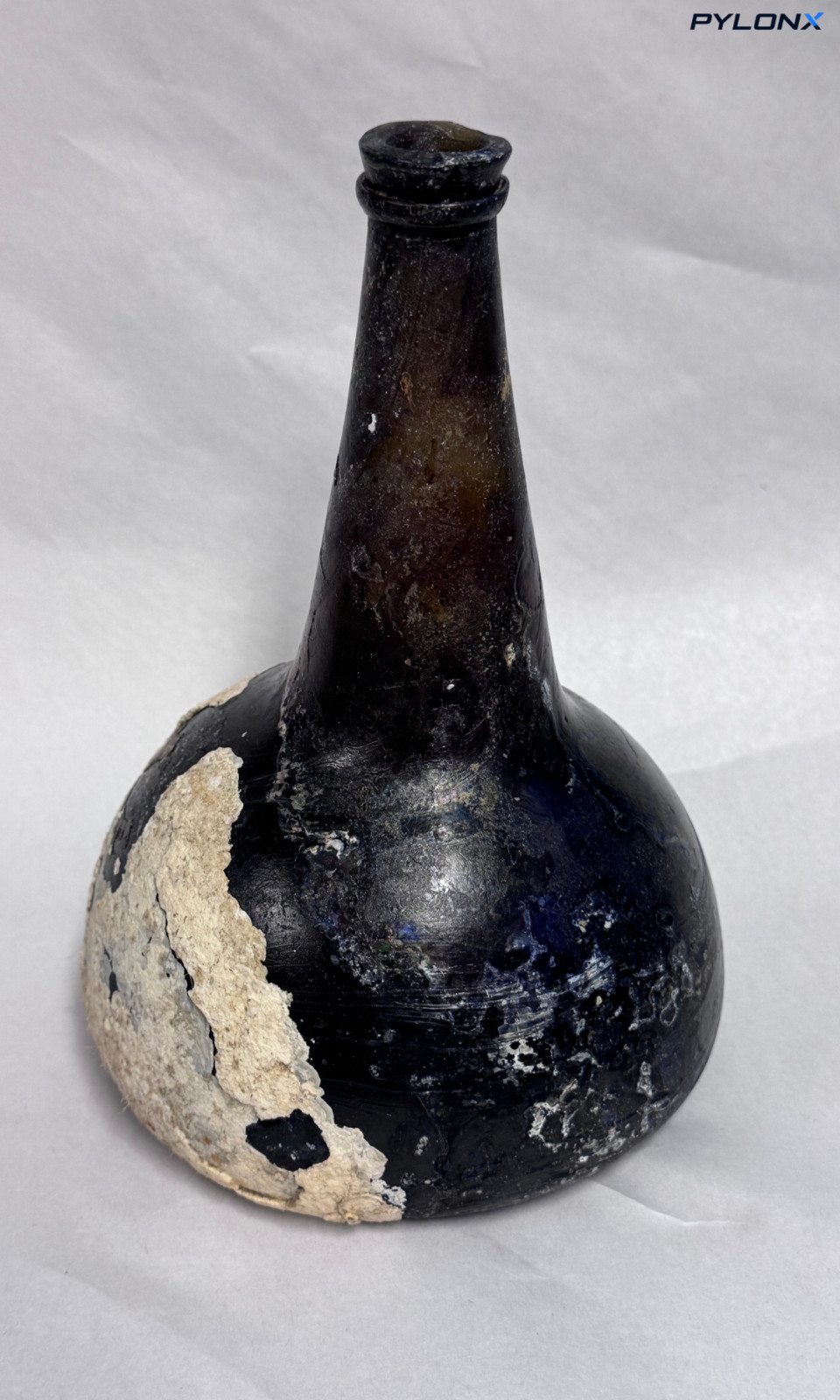
Exceptional antique Dutch hand-blown black-glass onion wine bottle, attributed to circa 1680–1750, representing the historic European glassmaking traditions of the late 17th and early 18th centuries.This remarkable example features a distinctive bulbous onion-shaped body, elongated tapering neck, applied glass string rim, and deeply recessed base. Manufactured from thick, dark olive-green glass that appears nearly black, the bottle retains extensive marine encrustation, mineral deposits, and centuries-old surface patina.
Historical Background
Dutch onion bottles were produced and widely circulated during the late 17th and early 18th centuries, serving as durable containers for wine and other alcoholic beverages. These distinctive hand-blown vessels accompanied European merchants, sailors, and trading expeditions throughout the Atlantic, Caribbean, and international maritime trade routes.
The bottle closely resembles documented Dutch wine bottles recovered from early 18th-century shipwrecks, including comparable examples dating to the first half of the 1700s.
Theodore Dubyk Maritime Collection
This historic bottle originates from the private maritime collection of Theodore "Ted" Dubyk, an experienced diver, underwater explorer, and author of The Shipwreck of Voodoo Reef.
Dubyk participated in maritime exploration and underwater recovery expeditions throughout the Caribbean and surrounding regions during the latter half of the 20th century. His collection includes historic European ceramics, antique glassware, maritime hardware, and artifacts associated with early European maritime trade.
Notably, Dubyk and his associates explored historic wreck sites near Cap-Haïtien, Haiti, including a French merchant vessel identified in his manuscript as the Jume Eima, associated with the late 18th century.
This bottle was preserved within Dubyk's maritime collection and is believed to have been recovered during underwater exploration activities. Its precise recovery site and association with any particular shipwreck have not been conclusively established.
Dimensions & Historical Identification
Origin: Netherlands / Dutch glassmaking tradition (attributed)
Period: Circa 1680–1750
Type: Onion-form wine or liquor bottle
Material: Hand-blown dark olive-green / black glass
Height: Approximately 8.25 inches
Weight: 1.19 pounds
Manufacturing Features: Applied string rim, elongated tapered neck, recessed kick-up base
Surface: Extensive marine encrustation and naturally developed patina
Collection: Theodore Dubyk Private Maritime Collection
Specific Shipwreck: Unconfirmed
Historical & Collectible Significance
A distinctive example of early Dutch-style bottle-making, offering collectors a tangible connection to the maritime commerce and European glassmaking traditions of the 17th and 18th centuries.
Its substantial marine encrustation, well-preserved historical profile, and association with Theodore Dubyk's underwater exploration collection make it especially appealing to collectors of antique glass, Dutch maritime history, shipwreck artifacts, nautical antiques, and early European trade objects.
The bottle has been preserved with its characteristic surface deposits intact, maintaining the visual qualities associated with its reported maritime recovery history.
An exceptional historical collectible from a private maritime exploration collection, combining early European craftsmanship with a fascinating Caribbean exploration history.