When you click on links to various merchants on this site and make a purchase, this can result in this site earning a commission. Affiliate programs and affiliations include, but are not limited to, the eBay Partner Network.
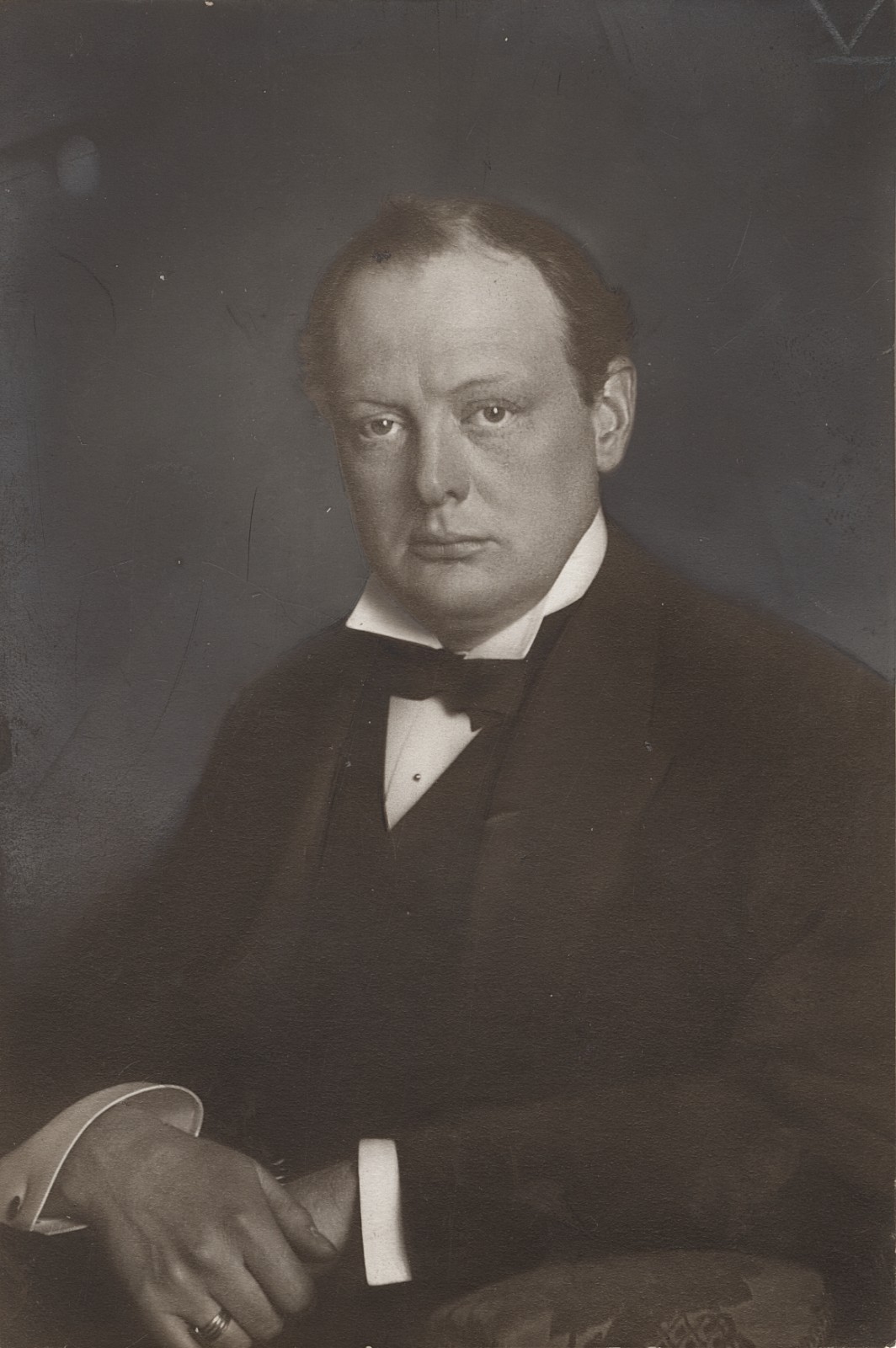
DATE: 1904PHOTOGRAPHER: Elliott & Fry (see bio below)SUBJECT: Winston Churchill (see bio below)PROCESS: AlbumenSIZE: Board measures4.25\" x 6.5\" and mounted photo measures 3.875\" x 5.875\"CONDITION: Publication paint on the background. Edgewear. Bottom corners damaged. See photosSHIPPING: Shipping cost is non-negotiable, please consider it when offerding/buying.COMBINED SHIPPING: Yes, I do combine shipping. Additional shipping per item is 20% of the lower shipping cost [For example, if 2 items are purchased that have a $30 and $10 shipping cost each, the combined shipping cost becomes $32 for the 2 items]. If offerding/buying more than 1 item, please wait for an invoice with combined shipping before & Fry was a Victorian photography studio founded in 1863 by Joseph John Elliott and Clarence Edmund Fry. For a century, the firm\'s core business was taking and publishing photographs of the Victorian public and social, artistic, scientific and political luminaries. In the 1880s, the company operated three studios and four large storage facilities for negatives, with a printing works at Barnet.The firm\'s first address was 55 & 56 Baker Street in London, premises they occupied until 1919. The studio employed a number of photographers, including Francis Henry Hart and Alfred James Philpott in the Edwardian era, Herbert Lambert and Walter Benington in the 1920s and 1930s and subsequently William Flowers. During World War II, the studio was bombed and most of the early negatives were lost; the National Portrait Gallery currently holds all of the surviving negatives. With the firm\'s centenary in 1963, it was taken over by Bassano & Vandyk.Joseph John Elliott (14 October 1835 Croydon – 30 March 1903 Hadley Heath, near Barnet) the son of John and Mary Elliott, married Clarence\'s sister, Elizabeth Lucy Fry (24 June 1844 Plymouth – 23 February 1931), in Brighton on 20 August 1864, eventually producing 4 sons and 3 daughters. Elliott\'s partnership with Fry was dissolved on 31 July 1887, Elliott acquiring Fry\'s interest. Elliott\'s partnership with his own son, Ernest C. Elliott, was dissolved on 31 December 1892. Ernest went on to compile an album of 50 British sportsmen, Fifty Leaders of British Sport, published in 1904.In 1865 Clarence Edmund Fry (Plymouth 1840 – 1897) married Sophia Dunkin Prideaux (*1838 Modbury, Devon), who was a photographic colourist. Clarence Edmund Fry was an early patron of Hubert von Herkomer, who in 1873 moved to Bushey apparently to be near his benefactor, and to start the Herkomer Art School.Clarence was the eldest son of Edmund Fry and Caroline Mary Clarence (1809–1879), both members of the Religious Society of Friends or Quakers, and related to Joseph Storrs Fry, founder of the Bristol chocolate factory.Clarence\'s siblings were:Walter Henry Fry (born 1841, Plymouth)Hubert Oswald Fry (born 1843, Plymouth)Lucy Elizabeth Laughton Fry (born 1844, Plymouth)Allen Hastings Fry (born 1847, Plymouth)In 1867 the second eldest son, Walter Henry Fry, joined the youngest brother, Allen Hastings Fry, and started the photography firm of W. & A. H. Fry of 68 East Street, Winston Churchill (1874–1965) was one of the most significant figures of the 20th century. While he is best known for his leadership of Great Britain during World War II, his life spanned a staggering range of roles: soldier, journalist, historian, painter, and two-time Prime Minister.Born at Blenheim Palace into the aristocratic Spencer-Churchill family, he was the son of Lord Randolph Churchill and American socialite Jennie Jerome. His early years were marked by a difficult relationship with his parents and a lackluster school record.The Soldier-Journalist: Seeking adventure (and fame to launch a political career), he joined the cavalry and served in Cuba, India, and Sudan. He famously took part in one of the last great British cavalry charges at the Battle of Omdurman (1898).The Great Escape: During the Boer War in South Africa, he was captured as a war correspondent. His daring escape from a prisoner-of-war camp made him a national hero at age 25.Churchill entered Parliament in 1900. He was famously unpredictable, switching parties twice—moving from the Conservatives to the Liberals (around the time of the photo you scanned) and eventually back again.Early Highs and Lows: He held major posts, including First Lord of the Admiralty during WWI. However, he was blamed for the disastrous Gallipoli Campaign, which nearly ended his career and forced him to serve briefly in the trenches of the Western Front to redeem his reputation.The Wilderness Years: During the 1930s, Churchill was out of power and largely ignored. He spent this decade warning a reluctant Britain about the rising threat of Adolf Hitler and Nazi Germany, a period now known as his \"Wilderness Years.\"The \"Finest Hour\" (1940–1945)When WWII broke out and the policy of appeasement failed, Churchill was called back to lead. On May 10, 1940, he became Prime Minister.The Great Orator: At a time when Britain stood alone against the Nazis, Churchill’s speeches—filled with \"blood, toil, tears, and sweat\"—galvanized the British people.The Grand Alliance: He worked tirelessly to bring the United States into the war, forming a \"Special Relationship\" with FDR and a wary but effective alliance with Stalin to defeat the Axis powers.Surprisingly, Churchill was voted out of office just as the war ended in 1945. However, he remained a global titan:The Iron Curtain: In 1946, he gave a famous speech in Missouri where he coined the term \"Iron Curtain\" to describe the divide between Western Europe and the Soviet-controlled East.Nobel Prize: He returned as Prime Minister in 1951. In 1953, he was awarded the **Nobel Prize in Literature**, not for his politics, but for his mastery of historical description and brilliant oratory.He died in 1965 at age 90 and was granted a rare state funeral, attended by representatives from over 100 countries.